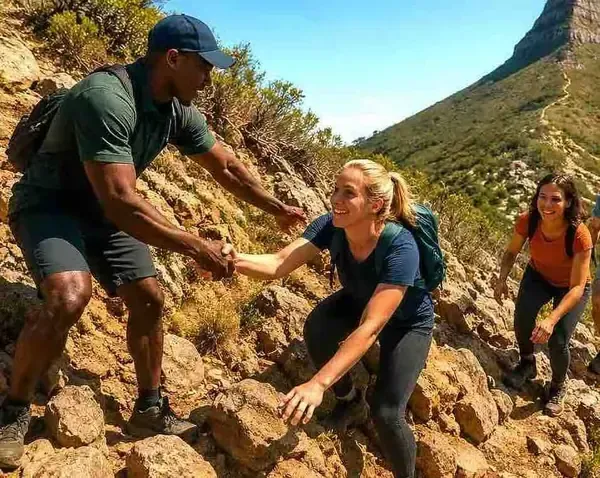
Cape Town Hiking for USA Visitors in 2026: A Local Guide
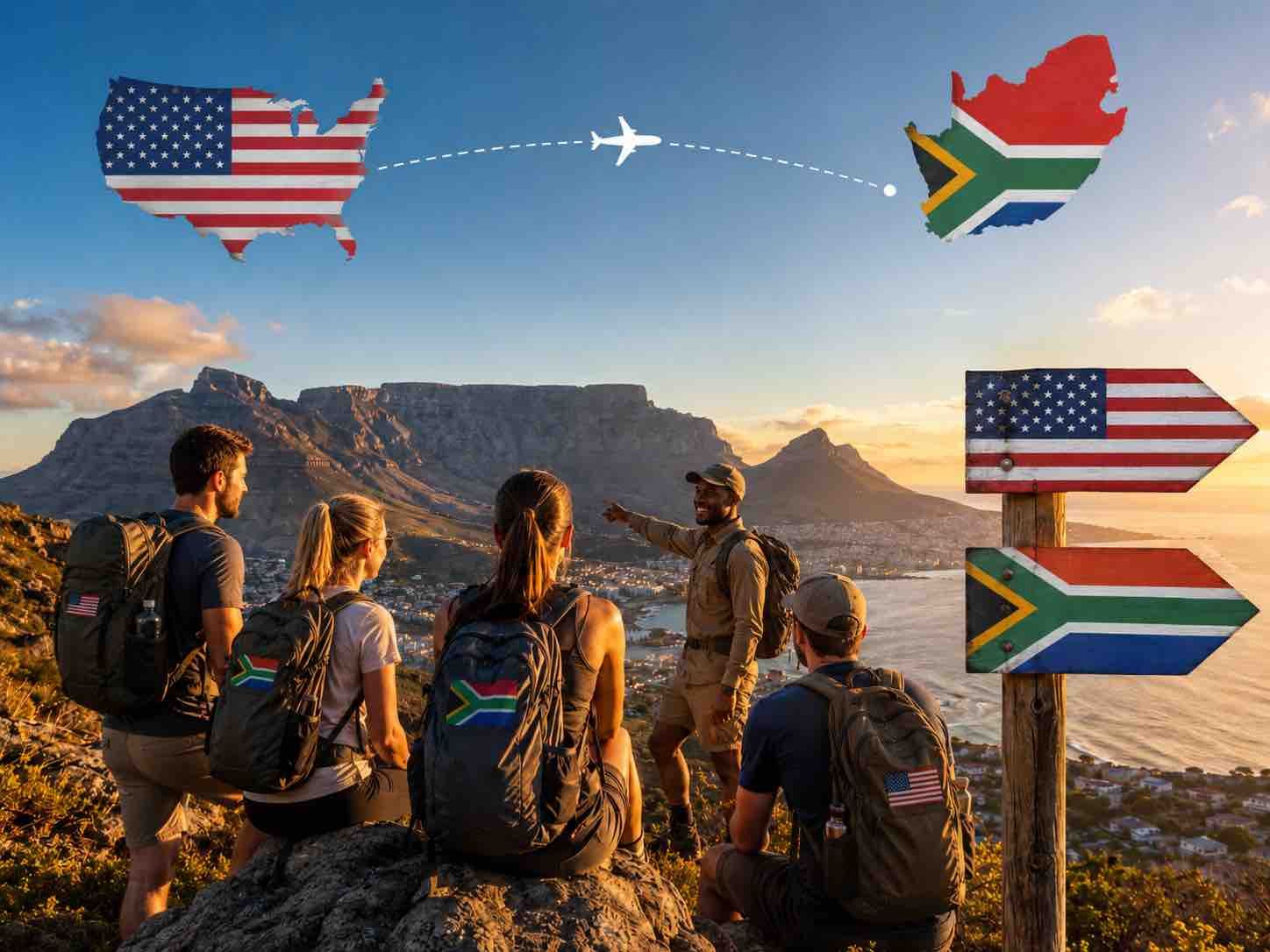
Cape Town offers some of the most rewarding city-accessible hiking in the world, but hiking here can feel very different from hiking in the United States.
We measure distance in kilometres, elevation in metres and temperature in Celsius. We drive on the left-hand side of the road, our seasons are opposite to yours, and a trail described as short may still include steep rock steps, loose stones, ladders, chains, scrambling or exposure to heights.
Meet Your Local Cape Town Hiking Guide
Choose a Trail
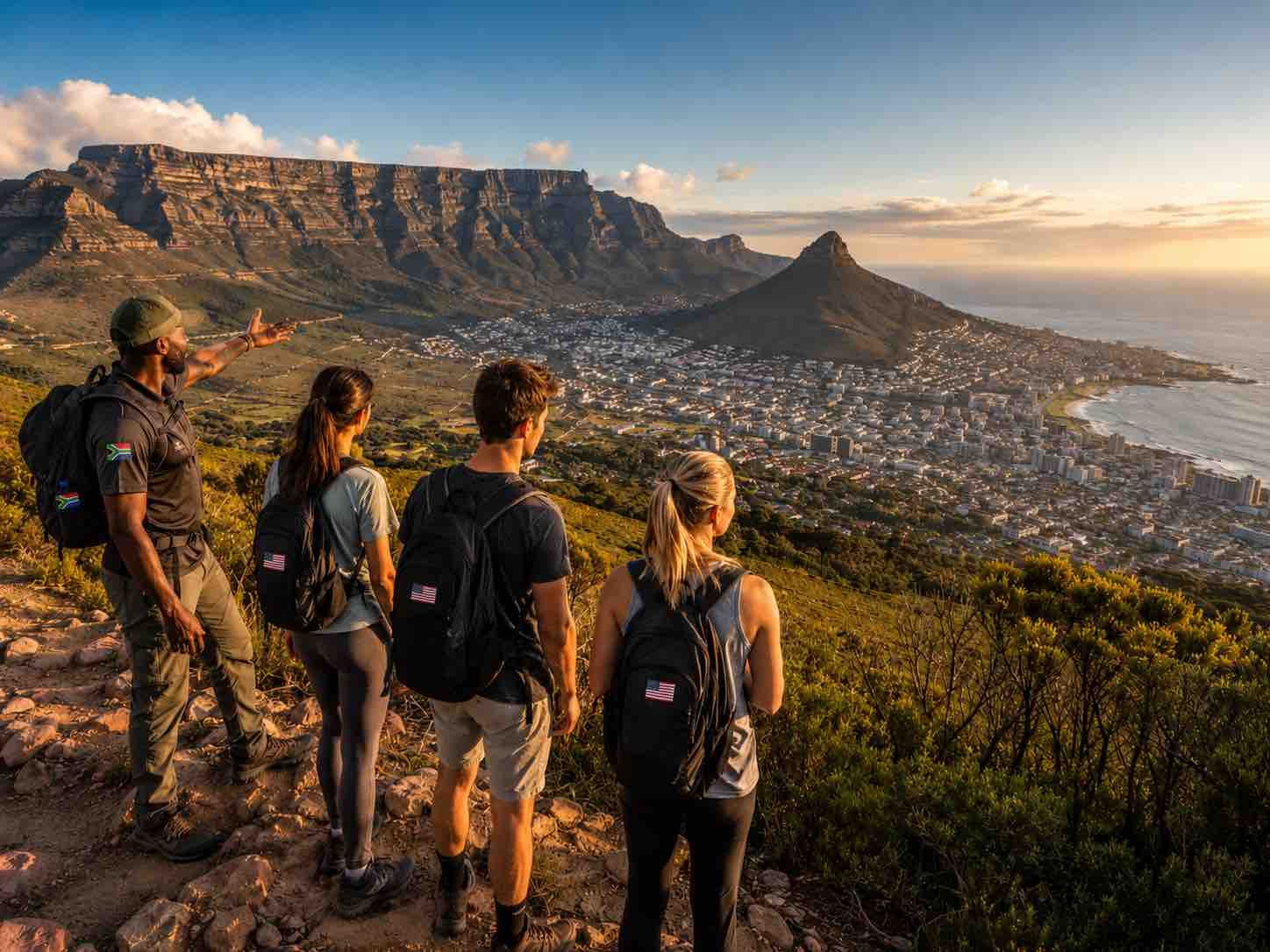
Quick Facts About Cape Town Hiking for USA Visitors in 2026
1.Location:
Cape Town, Western Cape, South Africa
2. Main Hiking Area:
Table Mountain National Park
3. Popular Routes:
Lion’s Head, Platteklip Gorge, India Venster, Skeleton Gorge and Pipe Track
4. Measurement System:
Metric
5. Distance Conversion:
1 kilometre is approximately 0.62 miles
7. Elevation Conversion:
100 metres is approximately 328 feet
8. Temperature:
Measured in degrees Celsius
9. Currency:
South African rand, shown as ZAR or R
10. Time Zone:
South African Standard Time, UTC+2
11. Daylight Saving Time: Cape Town does not change its clocks
12. Driving Side: Left-hand side of the road
13. Typical Guided Hike Duration: Approximately 2.5–5 hours, depending on the route
13. Typical Water Recommendation: Approximately 1.5–2 litres, or 51–68 US fluid ounces, per person
14. Best Starting Time: Usually early morning, depending on the route, season and weather
15.Trail Surface: Natural rock, stone steps, gravel, sand, roots and uneven mountain paths
16. Suitable for Beginners: Yes, but only on a route matched to the person’s fitness and confidence
17. Suitable for Children:
Some routes are suitable, depending on age, experience, balance and conditions
18. Suitable for Seniors: Yes, when the route is selected around mobility, knees, balance and fitness
19. Cableway Availability: Weather-dependent and subject to seasonal operating times
20. 2026 Cableway Maintenance: Closed from 27 July through 9 August 2026
21. Expected Cableway Reopening: 10 August 2026, weather permitting
22. Cableway During Maintenance: No cable-car ascent or descent is available
23. Main Mountain Emergency Number: 086 110 6417
24. General Mobile Emergency Number: 112
25. Guide Requirement: A guide is not legally required on ordinary public routes, but local guidance can help with route choice, pacing, weather, navigation and descent planning
⚠️ Important Notice:
Trail access, Cableway operations, entry fees and weather conditions can change. Check official information again shortly before your hike.
🛤️ QUICK NAVIGATION
Start here: Cape Town hiking advice for USA visitors
If this is your first time visiting Cape Town, start with this main guide:
Is Cape Town Hiking Suitable for USA Visitors?
Yes. I guide American visitors with many different levels of experience, from regular mountain hikers to guests who mostly walk for exercise at home.
The important question is not whether Cape Town hiking is suitable for Americans.
The real question is:
Which Cape Town hiking route is suitable for you?
A trail may be physically short but still feel demanding because of steep climbing, uneven rock steps or exposure.
A guest may be fit enough for the climb but become uncomfortable when the path narrows or the ground drops away beside them.
Another guest may feel completely comfortable around heights but struggle with the repeated impact of a long descent on their knees.
Cape Town hiking may suit you when I select the experience around:
• Your activity level
• Your previous experience
• Your comfort on uneven ground
• Your knees, hips, ankles and back
• Your balance
• Your confidence around heights
• Your preferred pace
• The weather
• Your available time
• The age and ability of any children
• Whether you want a summit or scenic walk
When a couple or family has different fitness levels, I plan around the person who needs the most support.
I would rather slow down, shorten the route or choose another trail than make someone feel that they are holding everyone back.
A successful hike is not only about reaching the summit.
I want you to finish feeling that you experienced Cape Town’s mountain—not that you merely survived it.
How Cape Town Hiking Differs from Hiking in the USA
When I guide visitors from the United States, I begin by explaining a few practical differences.
These details may seem small, but they influence how you understand route information and prepare for the mountain.
We Measure Distance in Kilometres
In South Africa, route distances are normally given in kilometres.
Useful conversions include:
• 3 kilometres is approximately 1.9 miles
• 5 kilometres is approximately 3.1 miles
• 8 kilometres is approximately 5 miles
• 10 kilometres is approximately 6.2 miles
However, I never want a guest to judge a Cape Town hike by distance alone.
A short route can feel demanding when it climbs steeply over natural rock steps. A longer trail may feel more comfortable when its gradient is gentler.
I consider distance together with elevation, terrain, heat, exposure, scrambling and the descent.
We Measure Elevation in Metres
Elevation gain is normally described in metres.
Useful conversions include:
• 100 metres is approximately 328 feet
• 300 metres is approximately 984 feet
• 600 metres is approximately 1,969 feet
• 1,000 metres is approximately 3,281 feet
Cape Town’s mountains are not considered high-altitude mountains by American standards.
I am usually more concerned about heat, wind, dehydration, slippery rock, tired legs, navigation and whether every guest can descend safely.
We Measure Temperature in Celsius
Useful temperature conversions include:
• 10°C is 50°F
• 15°C is 59°F
• 20°C is 68°F
• 25°C is 77°F
• 30°C is 86°F
• 35°C is 95°F
I do not look only at the temperature shown for central Cape Town.
I also consider:
• Wind
• Cloud
• Sun exposure
• Starting time
• The side of the mountain
• Available shade
• The route’s elevation
A comfortable temperature outside your hotel may feel much colder or hotter on an exposed trail.
Our Seasons Are Opposite
Cape Town’s seasons are opposite to those in the United States.
• Summer: December through February
• Autumn: March through May
• Winter: June through August
• Spring: September through November
If you visit Cape Town in July, you are arriving during our winter.
If you visit over Christmas, you are arriving during our warm summer period.
Pack for Cape Town’s season, not the season you have just left at home.
Trail Ratings Are Not Fully Standardised
Words such as easy, moderate and difficult can be misleading.
When I describe a route, I explain the actual terrain.
I will tell you whether it includes:
• Steep climbing
• High natural steps
• Loose stones
• Ladders
• Chains
• Scrambling
• Narrow sections
• Exposure to heights
• A demanding descent
I would never describe a route as easy without explaining what you will physically encounter.
Cape Town Trails Can Feel Less Engineered
Many Cape Town routes are natural mountain paths rather than smooth, evenly graded trails.
You may encounter:
• Loose stones
• Natural rock steps
• Large step-ups
• Tree roots
• Sand
• Wet rock
• Narrow paths
• Wooden ladders
• Chains
• Short scrambling sections
Most trails do not have regular toilets, drinking fountains, handrails or shelters.
Secure footwear, enough water and proper preparation are important even when the mountain appears close to the city.
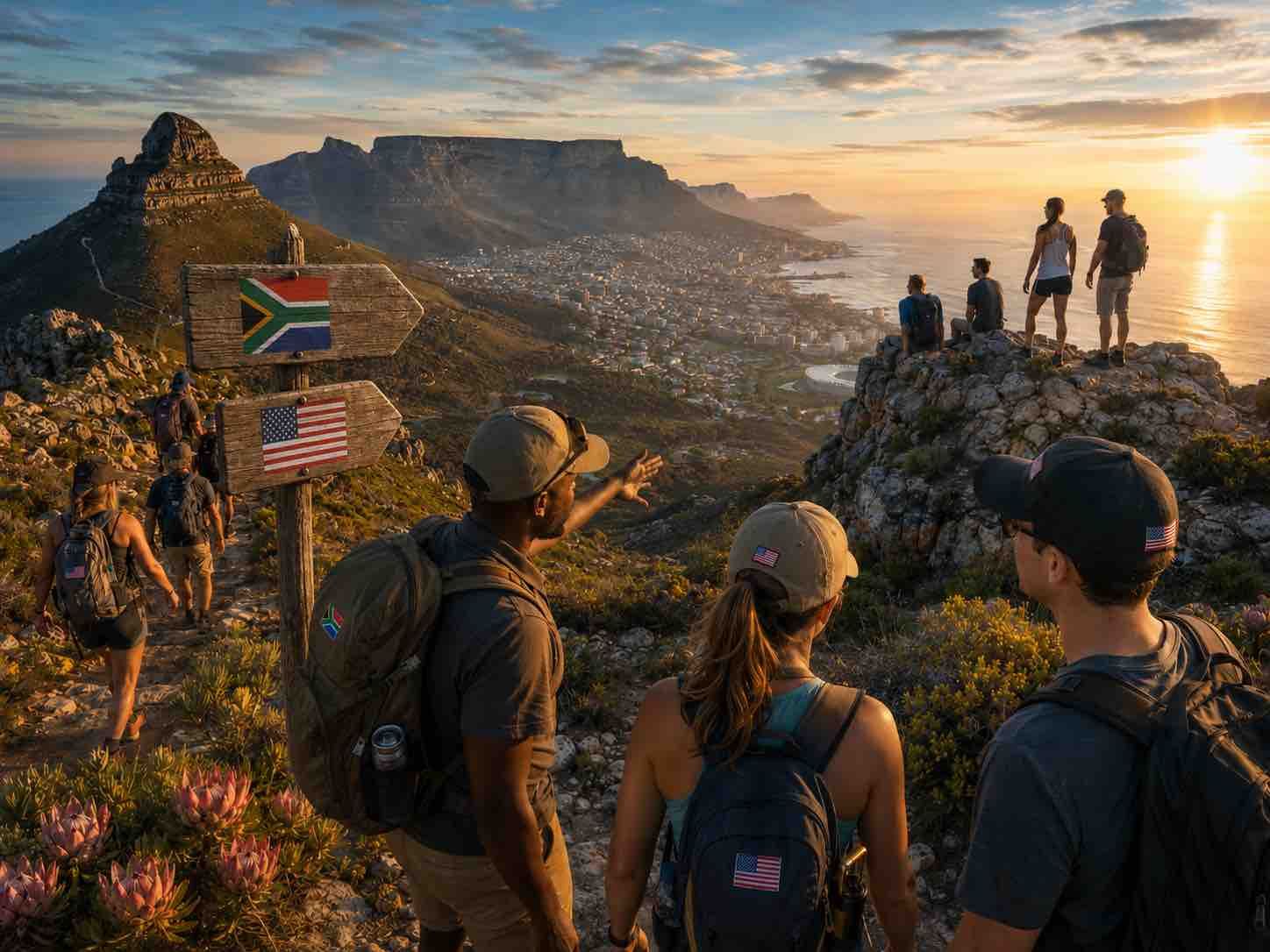
Best Cape Town Hikes for USA Visitors
There is no single best Cape Town hike for every American visitor.
The right route depends on the experience you want and what your body can comfortably manage.
Lion’s Head Hike
Typical duration: Approximately 2.5–4 hours return
Distance: Approximately 5.5 kilometres or 3.4 miles return
General difficulty: Moderate
Best for: Active visitors wanting an iconic, shorter summit hike
Lion’s Head is popular because it offers wide city, mountain and ocean views without requiring a full Table Mountain crossing.
The trail begins on a broad path that winds around the mountain. It becomes steeper and rockier near the summit.
The upper sections may include ladders, chains and scrambling. Alternative sections can sometimes be used, but visitors should not assume that the entire route is a comfortable walking path.
Lion’s Head may suit:
• Active first-time Cape Town hikers
• Couples
• Solo travellers
• Photographers
• Visitors wanting sunrise or sunset
• Guests with limited time
• People comfortable moving over rocks
Lion’s Head may not suit:
• Guests with a strong fear of heights
• People uncomfortable on ladders
• Visitors with poor balance
• Guests with serious knee or mobility concerns
• Very young children
• Anyone expecting a flat walk
The descent deserves as much attention as the climb.
Tired legs, loose stones and crowds can make coming down feel more demanding than expected.
Platteklip Gorge Hike
Typical duration: Approximately 1.5–2.5 hours one way
Distance: Approximately 2.5 kilometres or 1.6 miles one way
General difficulty: Moderate to strenuous
Best for: Fit visitors wanting the most direct traditional route to the top of Table Mountain
Platteklip Gorge is the classic direct climb to Table Mountain’s upper plateau.
It does not normally require technical scrambling, but it is steep and physically demanding.
Many visitors see the short distance and assume that the route will be quick and easy. In reality, it climbs through a long sequence of natural rock steps, with limited shade.
Platteklip Gorge may suit:
• Fit beginners
• Regular walkers
• Visitors comfortable with a sustained uphill climb
• Guests wanting a recognised Table Mountain route
• Hikers planning to descend by Cableway when it is operating
It may not suit:
• Guests with knee problems
• People who struggle with repeated high steps
• Visitors starting late on a hot day
• Anyone wanting a relaxed scenic walk
• Guests who have not planned their descent
Never treat the Cableway as guaranteed transport.
Wind, weather, maintenance or operational conditions may stop the service. You must know how you will descend if it is not running.
India Venster Hike
Typical duration: Approximately 3–4 hours one way
Distance: Approximately 3.5–4.3 kilometres or 2.2–2.7 miles one way
General difficulty: Strenuous and moderately technical
Best for: Fit, confident hikers who enjoy scrambling and exposure
India Venster follows the front face of Table Mountain and offers dramatic views over the city and Atlantic coastline.
It is more technical and exposed than Platteklip Gorge.
The route includes hands-on scrambling, chains, rocky ledges and sections where confidence around heights is essential.
India Venster may suit:
• Experienced hikers
• Fit adventure travellers
• Guests who enjoy scrambling
• Visitors with good balance
• Hikers comfortable following close guidance
It may not suit:
• Anyone with a strong fear of heights
• Guests who freeze on exposed terrain
• Young children
• Visitors with poor balance
• People with serious knee or mobility concerns
• Guests wanting a casual first hike after a long flight
I do not recommend India Venster simply because its photographs look exciting.
Your genuine comfort with exposure matters more than your general fitness.
Skeleton Gorge Hike
Typical duration: Approximately 4–5 hours, depending on the finishing point
General difficulty: Moderate to challenging
Best for: Fit nature lovers wanting forest, ladders and changing scenery
Skeleton Gorge begins in Kirstenbosch and climbs through a greener, more sheltered section of Table Mountain.
The route includes forest paths, rocks, wooden ladders and stream sections. After rain, roots, rocks and wooden surfaces can become slippery.
Skeleton Gorge may suit:
• Nature lovers
• Fit hikers
• Visitors who enjoy forest scenery
• Guests wanting a longer experience
• Photographers interested in plants and landscapes
It may not suit:
• Guests uncomfortable on ladders
• People with serious knee concerns
• Visitors wanting a short hike
• Anyone without secure footwear
• Guests who assume the entire route remains shaded
Kirstenbosch entry, transport and Cableway tickets, when used, may be separate costs.
Pipe Track Scenic Walk
Typical duration: Flexible
General difficulty: Easy to moderate, depending on distance
Best for: Visitors wanting ocean views without a major summit climb
Pipe Track follows the western slopes above Camps Bay and provides beautiful views of the Atlantic Ocean and Twelve Apostles.
It still includes uneven ground and rocky sections, but it can be adapted more easily than a summit route.
Pipe Track may suit:
• Beginners
• Families
• Older guests with reasonable walking ability
• Sunset walkers
• Visitors recovering from jet lag
• Guests who want scenery without a steep summit
It can become hot and exposed later in the day.
I select the turnaround point according to the group, weather and remaining daylight.
First Light Walk to King’s Blockhouse
Typical duration: Flexible
General difficulty: Easier than the major summit routes
Best for: Guests wanting sunrise atmosphere without a difficult summit
This lower-slope experience offers early-morning light, city views and mountain history without the exposed upper terrain found on Lion’s Head or India Venster.
It may suit:
• First-time hikers
• Families with older children
• Retirees
• Guests nervous around heights
• Visitors wanting a quieter sunrise
• People who prefer walking to scrambling
A shorter route is not a lesser experience.
For many guests, this walk is more enjoyable than forcing a summit route that does not suit them.
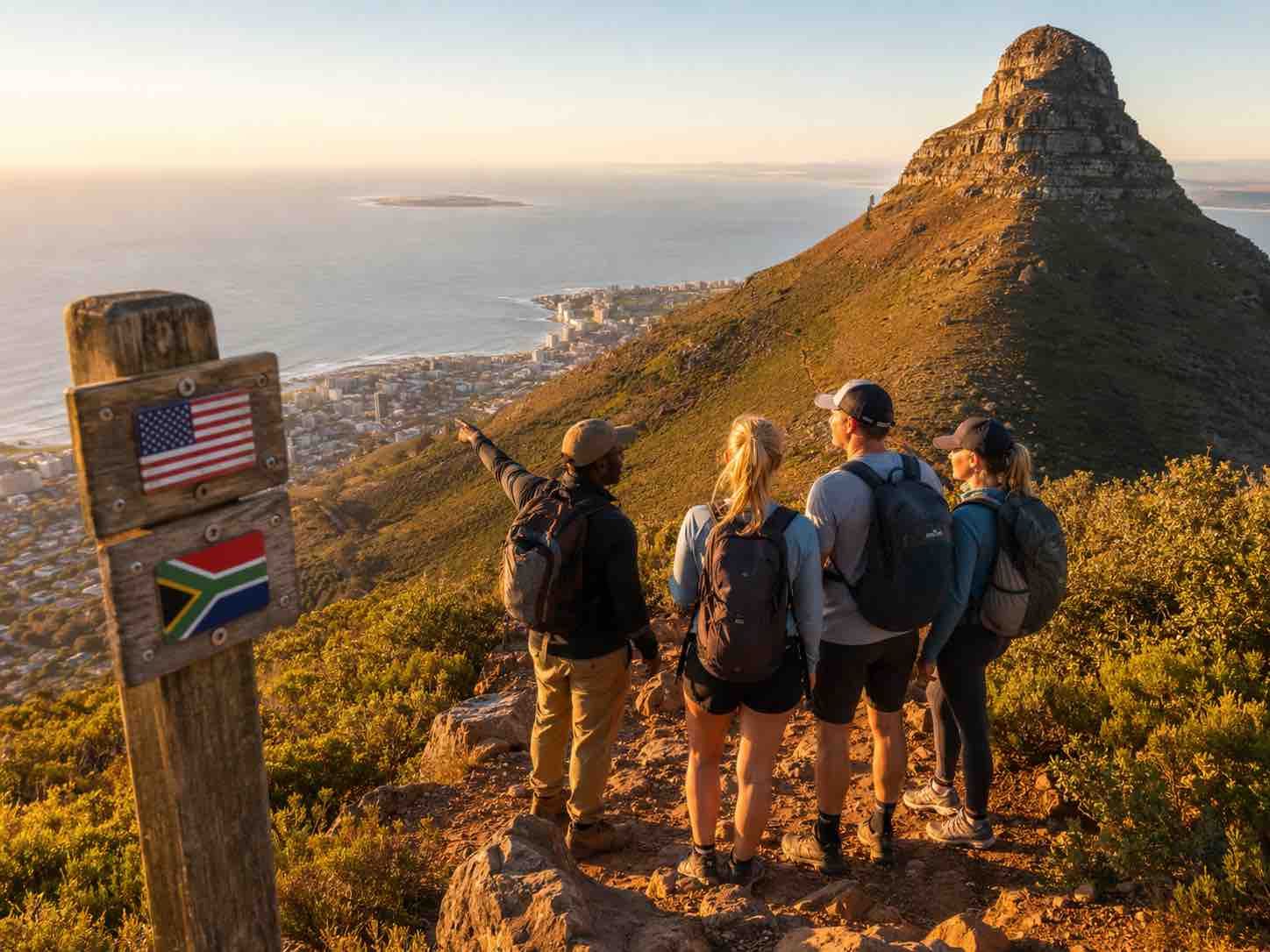
Cape Town Hiking Route Comparison
Lion’s Head
Best for: Iconic views, sunrise, sunset and a shorter summit
Main challenges: Ladders, scrambling, steep upper terrain and exposure
Platteklip Gorge
Best for: A direct traditional climb to Table Mountain’s summit
Main challenges: Sustained steep rock steps, heat and knee pressure
India Venster
Best for: Fit and confident adventure hikers
Main challenges: Exposed scrambling, chains, ledges and route finding
Skeleton Gorge
Best for: Forest scenery, nature and a longer varied hike
Main challenges: Ladders, slippery surfaces and a longer day
Pipe Track
Best for: Ocean views, beginners, families and gentle scenic walking
Main challenges: Heat, uneven ground and exposed sections
King’s Blockhouse
Best for: A quieter sunrise and less demanding mountain experience
Main challenges: Uneven paths, early starting time and changing weather
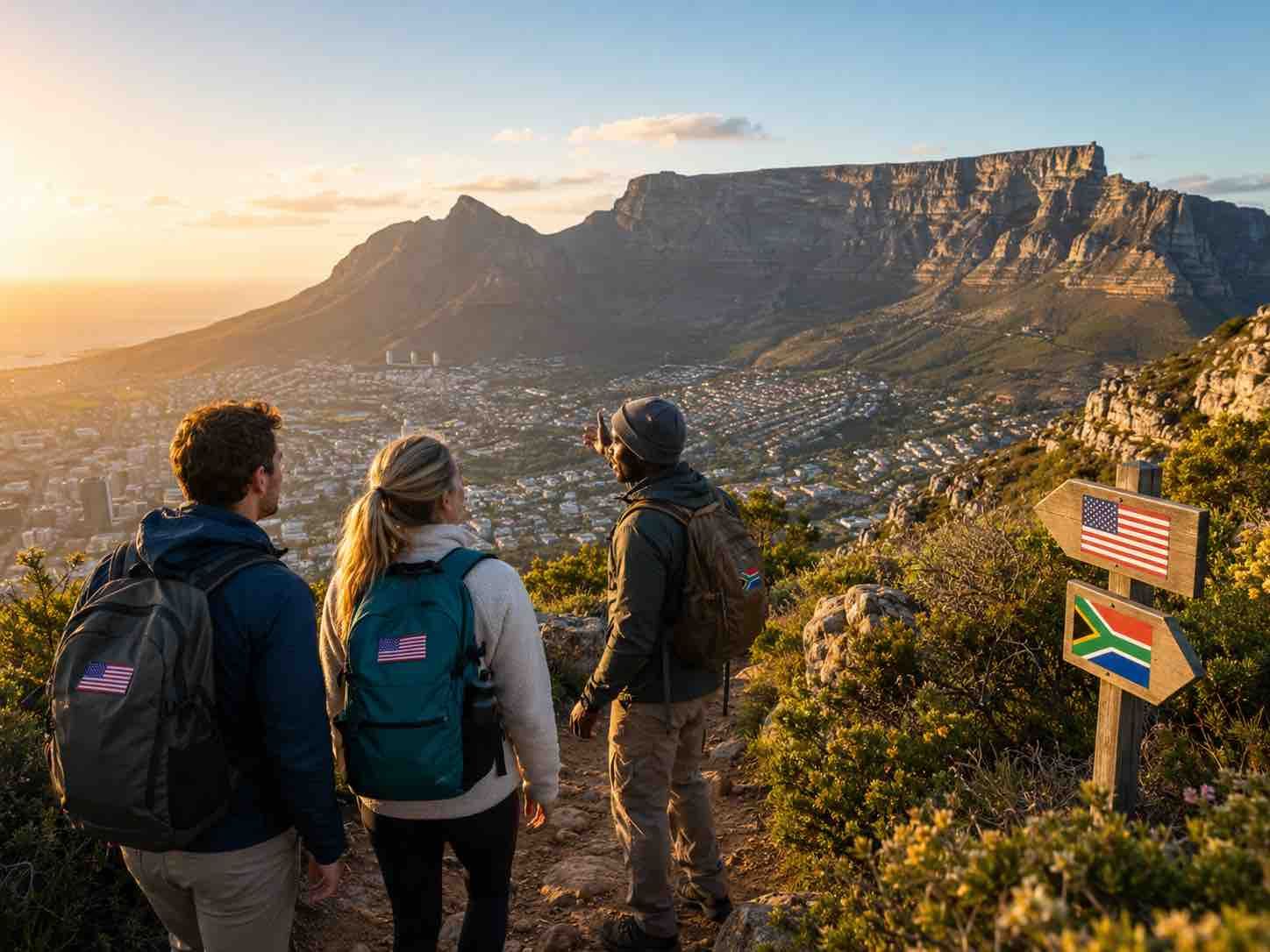
How I Choose the Right Route for You
When you contact me, I do not begin by asking which famous summit you want to reach.
I begin by asking about you.
I want to understand:
• How active you are during an ordinary week
• How many miles you comfortably walk
• Whether you climb hills or stairs
• How your knees feel when descending
• Whether you have ankle, hip or back concerns
• How your balance is
• Whether you are comfortable using your hands on rock
• Whether you have used ladders on a trail
• Whether you are afraid of heights
• Whether children are joining
• How long you have been in Cape Town
• How much time you have
• What type of scenery interests you
I ask these questions because the most popular trail is not automatically the correct one.
I will also tell you honestly when I believe a route does not suit you.
I would rather recommend an enjoyable experience than agree to a famous route simply because it is the one you first saw online.
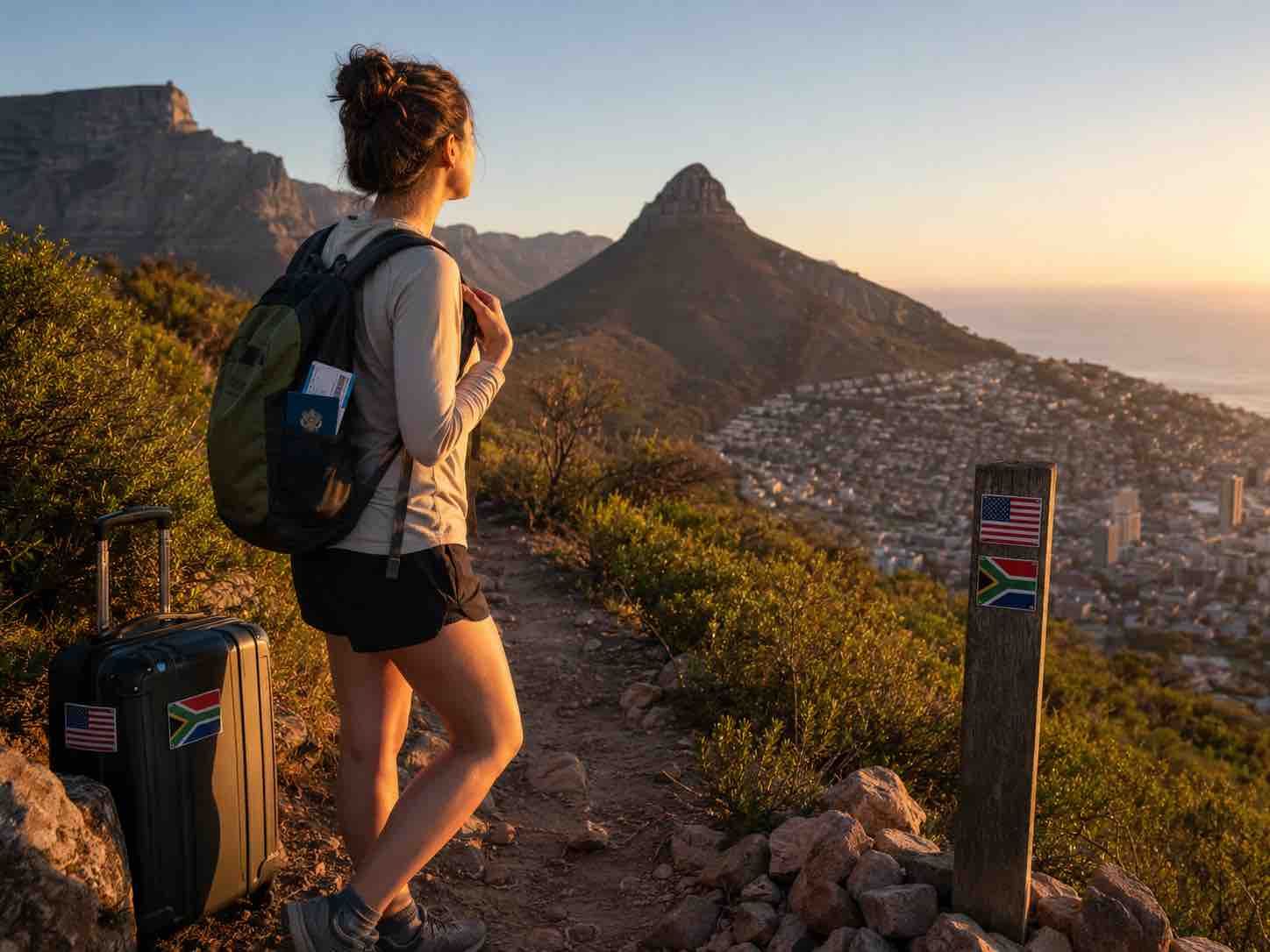
Is Hiking in Cape Town Safe for USA Visitors?
Cape Town hiking can be a safe and rewarding experience when the route, starting time, weather and group are properly considered.
I will never claim that any mountain activity is completely risk-free.
A guide cannot remove every risk, but local knowledge can help with:
• Route selection
• Starting time
• Weather assessment
• Navigation
• Pacing
• Rest stops
• Scrambling
• Descent planning
• Transport
• Decisions about turning around
Before starting, I assess the wind, cloud, temperature, visibility and any current information affecting our route.
I also pay attention to how you feel on the day.
A route that appeared suitable during planning may need to change if you are exhausted, unwell, nervous or struggling with the terrain.
My practical safety habits include:
• Using recognised routes
• Avoiding unnecessary shortcuts
• Planning around available daylight
• Carrying sufficient water
• Keeping emergency contacts available
• Asking guests to charge their phones
• Monitoring the group’s energy
• Planning the descent before the ascent
• Changing the route when conditions require it
Table Mountain National Park sits beside a large city, so personal security must also form part of responsible planning.
I do not use fear to sell guided hikes.
I simply advise visitors to stay informed, avoid displaying unnecessary valuables, remain aware of their surroundings and follow current official safety guidance.
I generally do not recommend that visitors unfamiliar with the area walk on isolated trails at night.
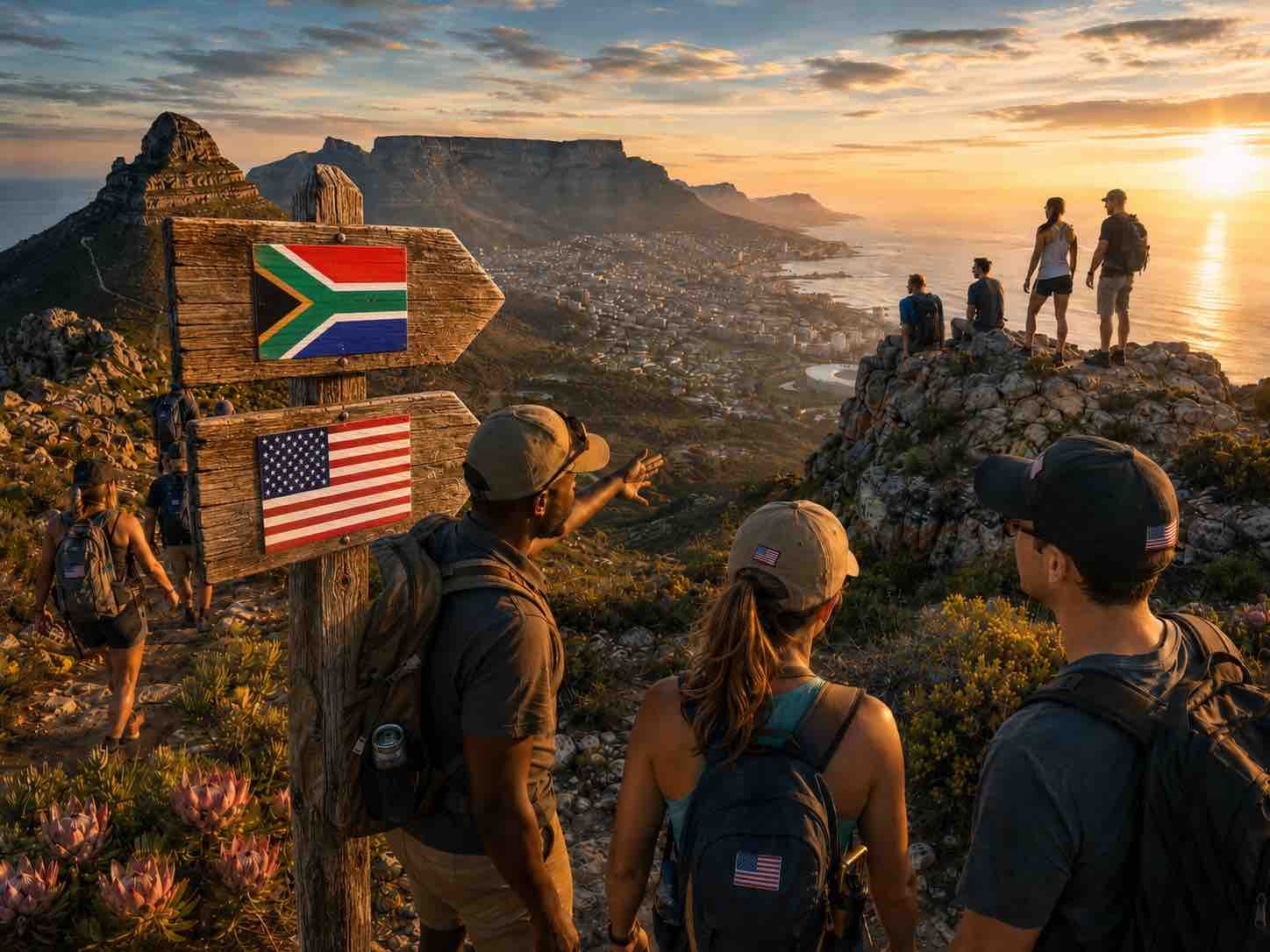
Cape Town Hiking Weather and Seasons
After many years on Cape Town’s mountains, I have learned not to plan a hike from the season alone.
I look at the actual weather for the route, starting time, elevation and side of the mountain we will use.
Summer Hiking — December to February
Summer brings longer days, strong sun and potentially high temperatures.
On exposed routes such as Platteklip Gorge, I often recommend an early start.
In summer, I watch for:
• Heat
• Dehydration
• Sun exposure
• Strong wind
• Limited shade
• Fire notices
• Cableway closures caused by wind
A short route does not mean that you can safely carry less water.
Autumn Hiking — March to May
Autumn can provide comfortable hiking conditions, although wind and temperature still change from day to day.
A cool morning may become warm once we reach an exposed slope.
I normally recommend carrying a light layer rather than dressing only for the conditions outside your accommodation.
Winter Hiking — June to August
Winter can provide clear and beautiful mountain days, but it is also Cape Town’s wetter season.
I consider:
• Rain
• Wet rock
• Slippery roots
• Cold wind
• Low cloud
• Reduced visibility
• Shorter daylight
• Stream flow on forest routes
I do not cancel a hike simply because there is cloud over one section of the city.
I also do not assume that a clear view from your hotel means the summit is safe.
I assess the route itself.
Spring Hiking — September to November
Spring can be a beautiful time for fynbos, flowers and changing mountain colours.
Conditions may still be windy and variable, so guests should prepare for sun, warmth and cooler exposed areas.
The Tablecloth Cloud
The cloud that forms over Table Mountain is often called the tablecloth.
When it spreads across the summit, visibility can reduce quickly. Paths and landmarks become harder to identify, temperatures may fall and rock can become damp.
I do not continue into poor visibility simply because the summit is close.
I consider the route, group, equipment, available time and alternative options.
Cape Town Wind
Wind is one of the most important factors in my daily planning.
Strong wind can affect:
• Balance
• Comfort
• Temperature
• Cableway operations
• Exposed scrambling
• Summit photography
• A nervous guest’s confidence
A route may feel protected at the start and become highly exposed further up.
I check the forecast, but I also watch the mountain itself.
How the Table Mountain Cableway Affects Your Hike
The Table Mountain Cableway is useful for many hiking plans, but I never treat it as a guaranteed descent.
Before guiding a route that may finish near the upper station, I check:
• Whether the Cableway is operating
• The last scheduled car
• Current summit conditions
• Ticket availability
• Remaining daylight
• Our walking alternative
• Whether every guest could descend on foot
Wind, weather, maintenance and operational conditions can affect the service.
I do not want you to arrive at the top believing that the Cableway is your only possible way down.
2026 Cableway Maintenance Closure
The Table Mountain Aerial Cableway is scheduled to close for annual maintenance from:
Monday, 27 July 2026 through Sunday, 9 August 2026
The planned reopening date is:
Monday, 10 August 2026, weather permitting
During the closure:
• No Cableway ascent is available
• No Cableway descent is available
• Summit hikers must return on foot
• Hiking plans must include a full walking descent
• Some Cableway-connected facilities may be unavailable
• Permitted hiking trails remain accessible unless separately restricted
If you contact me for a hike during this period, I will recommend a route that makes sense without relying on the Cableway.
Should You Buy a One-Way or Return Ticket?
When we are hiking up and planning to take the Cableway down, you will normally require a one-way descent ticket.
However, I prefer to confirm the route, weather and operating plan before advising you to purchase a ticket.
Buying a ticket does not guarantee that the Cableway will still be operating when we reach the summit.
Always confirm current prices and operating conditions through the official Cableway website.
How I Assess Fitness and Hiking Difficulty
I separate physical difficulty from technical difficulty.
This allows me to explain a route more honestly.
Physical Difficulty
I consider:
• Total distance
• Elevation gain
• Steepness
• Height of natural steps
• Heat and sun exposure
• Expected duration
• Guest pace
• Rest requirements
• Backpack weight
• The descent
Platteklip Gorge is a good example of a route that is technically straightforward but physically demanding.
You may not need to scramble, but you must climb a long sequence of steep rock steps.
Technical Difficulty
I consider:
• Scrambling
• Ladders
• Chains
• Narrow ledges
• Exposure to heights
• Loose surfaces
• Wet rock
• Route finding
• Whether hands are needed for balance
India Venster is both physically and technically demanding.
Lion’s Head may be less physically demanding for some guests, but its ladders and exposed upper sections can still create difficulty.
Why the Descent Matters
Many visitors focus only on reaching the summit.
I plan the descent before we begin.
Coming down may be difficult because of:
• Tired legs
• Knee pressure
• Loose stones
• Reduced concentration
• Crowds
• Darkness
• Changing weather
• A closed Cableway
A guest who feels strong while climbing may struggle once the downhill impact begins.
That is why I ask about your knees before choosing the route.
What to Pack for a Cape Town Hike
For many half-day hikes, I normally ask guests to bring:
• Approximately 1.5–2 litres of water
• A light meal or snack
• Sunscreen
• A sun hat
• Sunglasses
• A warm or wind-resistant layer
• A fully charged phone
• Essential personal medication
• Basic identification or a copy
• A power bank when practical
• A headlamp for planned low-light hiking
Water Conversion for American Visitors
• 1 litre is approximately 34 US fluid ounces
• 1.5 litres is approximately 51 US fluid ounces
• 2 litres is approximately 68 US fluid ounces
I may recommend more water for longer routes or strong summer heat.
Do not assume that safe drinking water will be available on the trail.
Food I Recommend
Bring food that is light, familiar and easy to eat, such as:
• Fruit
• A sandwich
• Nuts
• An energy bar
• Dried fruit
• A small salty snack
For a longer hike, one small snack may not be enough.
This is especially important when an early start or jet lag has disrupted your normal eating routine.
What to Leave at Your Accommodation
Avoid carrying unnecessary valuables or heavy equipment.
Large bags, glass bottles and too much camera equipment can make rocky movement more awkward.
Bring only what you can carry comfortably while keeping your hands available when the route becomes steep.
What to Wear for Cape Town Hiking
I always look at a guest’s footwear before we begin.
You need shoes with secure grip and enough support for uneven terrain.
Suitable footwear may include:
• Hiking shoes
• Trail-running shoes
• Supportive walking shoes with good grip on gentler routes
I do not recommend:
• Flip-flops
• Smooth-soled fashion sneakers
• Open sandals on rocky summit routes
• Brand-new shoes you have never worn
• Clothing that restricts movement
Dress in layers because conditions can change during the hike.
A practical outfit may include:
• A breathable shirt
• Hiking pants, shorts or leggings
• A light fleece
• A wind-resistant jacket
• A hat
• Comfortable socks
Guests sometimes leave a warm hotel and arrive at a cold, windy starting point.
It is easier to remove an extra layer than to discover we have nothing warm when the wind increases.
Jet Lag and Your First Cape Town Hike
Travelling from the United States to Cape Town can leave you more tired than you realise.
I do not automatically recommend your most difficult hike for the morning after arrival.
Jet lag can affect:
• Sleep
• Energy
• Balance
• Concentration
• Hydration
• Appetite
• Reaction time
• Your ability to judge effort
You may feel excited and mentally ready while your body is still tired from the journey.
Tell me when you arrive in Cape Town.
I can then decide whether a summit hike makes sense or whether a shorter scenic walk would be a better first experience.
A more challenging route can always be attempted after you have slept, eaten properly and adjusted to local time.
Transport, Parking and Driving in Cape Town
South Africans drive on the left-hand side of the road.
If you rent a car, remember that:
• The driver sits on the right
• Traffic travels on the left
• Roundabouts are entered differently from those in the United States
• Mountain parking areas may fill early
• Cars should not contain visible valuables
• Starting points may not have formal parking attendants
Do not assume that every trail starts at the same Table Mountain location.
Lion’s Head, Platteklip Gorge, India Venster, Skeleton Gorge, Pipe Track and King’s Blockhouse all have different meeting points.
I provide clear meeting information before a confirmed guided hike.
Where transport is available or agreed, I will explain exactly what is included before you book.
Currency, Costs and Payments
South Africa uses the rand.
You may see prices written as:
• R500
• ZAR 500
Both mean 500 South African rand.
I do not give a permanent US-dollar conversion because exchange rates change.
Possible hiking-related costs may include:
• Private guiding
• Transport
• Cableway tickets
• Kirstenbosch entry
• Conservation or access fees
• Food and water
• Equipment
• Parking
I will explain what is included in your particular booking before you confirm.
I do not want you to arrive expecting transport, entry fees or Cableway tickets to be included when they have not been listed.
Cards are widely used in Cape Town. Some facilities may operate without cash.
Check whether your bank charges foreign transaction fees.
Tipping is optional. I prefer that you treat it as recognition of the experience rather than something you are forced to add.
Hiking with Children
I enjoy helping families experience Cape Town’s mountains, but I select the route around the individual child rather than age alone.
Before recommending a route, I may ask:
• How far the child normally walks
• Whether they enjoy hills
• Whether they follow instructions calmly
• How their balance is
• Whether they are comfortable with heights
• Whether they have used ladders
• How they cope with heat
• Whether they become anxious when tired
• Whether they can complete the descent
A sporty child may still feel uncomfortable on exposed rock.
A confident child may still become tired on a long descent.
For younger or inexperienced children, I generally prefer a shorter scenic route rather than an exposed summit.
Parents should bring:
• Enough water
• Familiar snacks
• Sun protection
• A warm layer
• Required medication
• Patience for a slower pace
I will never encourage a parent to force a frightened child through an exposed section.
The mountain should build a child’s confidence, not turn the day into a stressful test.
Hiking for Seniors and Guests with Knee Concerns
Age alone does not tell me whether someone can enjoy a Cape Town hike.
I am more interested in how you move, what activity you normally do and how your body responds to climbing and descending.
A guest in their seventies who walks regularly may be stronger on the mountain than a much younger inactive visitor.
Tell me about:
• Knee replacements
• Hip replacements
• Arthritis
• Balance problems
• Vertigo
• Heart conditions
• Breathing conditions
• Recent surgery
• Previous injuries
• Walking poles
• Your normal walking distance
The descent is often my greatest concern.
A steep rock-step descent can place significant pressure on the knees even when the climb felt manageable.
I may recommend a lower-slope route, shorter turnaround walk or gentler scenic experience.
That is not a poor substitute.
It is often the decision that allows you to relax, enjoy the views and finish comfortably.
My Advice for Solo Travellers
I welcome solo travellers on my private guided hikes.
Many solo guests want:
• Company on the trail
• Local knowledge
• Help with navigation
• A flexible pace
• Sunrise or sunset support
• Photographs of themselves
• An alternative to joining a large group
When I guide one guest, I can focus completely on that person’s pace, confidence and interests.
If you choose to hike independently, tell someone your route and expected return time.
Keep your phone charged and check current official safety information.
Do not rely only on a hiking app.
Phone batteries can fail, reception can disappear and a line on a digital map does not always explain the real terrain.
Sunrise and Sunset Hikes
Sunrise and sunset can be beautiful times to experience Cape Town’s mountains, but darkness changes the way I plan.
I consider:
• Starting and finishing time
• Available daylight
• Headlamps
• Temperature
• Wind
• Route visibility
• Transport
• Parking
• The group’s pace
• Security
• The descent
For sunrise hikes, we may begin in darkness.
For sunset hikes, we may descend after the light has faded.
A familiar route can feel completely different in low light.
I do not depend on phone flashlights. For planned darkness, proper headlamps should be used.
Sunrise and sunset plans may change when the weather, wind or cloud makes the original route unsuitable.
Fynbos, Wildlife and Trail Etiquette
Table Mountain is not only a viewpoint. It is part of a unique natural environment.
I ask guests to respect the mountain by:
• Remaining on recognised paths
• Not picking flowers
• Not feeding wildlife
• Carrying out all waste
• Avoiding loud music
• Allowing faster hikers to pass
• Giving descending hikers space
• Avoiding damage to plants
• Following fire restrictions
• Leaving rocks and natural objects where they are
Baboons and other animals are wild.
Do not approach, feed or attempt to pose closely with them.
A private guided experience does not mean that we own the trail.
We share it with other hikers and with the natural environment.
How I Prepare for Emergencies
I do not begin a hike expecting an emergency, but responsible guiding includes preparation.
Important emergency numbers include:
Table Mountain National Park Emergency Number: 086 110 6417
Wilderness Search and Rescue: 021 937 0300
General Mobile Emergency Number: 112
Cape Town Emergency Services: 021 480 7700
I ask guests to keep their phones charged, but I do not assume that reception will always be strong.
In an emergency, priorities may include:
• Moving away from immediate danger when safe
• Keeping the group together
• Contacting the correct service
• Giving the route name
• Sharing an accurate location
• Explaining the injury or situation
• Following responder instructions
• Conserving phone battery
• Keeping an injured person warm
• Avoiding an unsafe improvised rescue
Someone outside the hiking group should know our expected route and return time.
Preparation does not remove all risk, but it helps us respond more calmly.
Should You Book a Private Hiking Guide?
You are not legally required to hire a guide for ordinary public hiking routes in Cape Town.
Many experienced hikers explore independently.
A private guide may be especially useful when:
• It is your first Cape Town hike
• You are uncertain which route suits you
• You want to start before sunrise
• You want to finish around sunset
• The route includes scrambling
• You have limited time
• You are travelling alone
• Your family has mixed fitness levels
• You are concerned about heights
• You have knee or balance concerns
• You need help planning transport
• You want to understand the landscape
• You prefer a personal pace
When you hike privately with me, you do not need to race strangers or hide that you need a rest.
I can adjust:
• The route
• The pace
• Rest stops
• The turnaround point
• Photography time
• The ascent and descent
• The plan when weather changes
Sometimes responsible guiding means choosing another trail.
Sometimes it means shortening the hike.
Sometimes it means turning around.
I do not measure a successful day only by whether we stood on the summit.
I measure it by whether I made responsible decisions and gave you a meaningful personal experience of Cape Town’s mountain.
Entry Requirements and Travel Preparation for Americans
US citizens travelling to South Africa for tourism generally do not require a tourist visa for visits of fewer than 90 days.
Your passport should generally:
• Remain valid for at least 30 days after your planned departure
• Contain two consecutive completely blank visa pages
A yellow-fever vaccination certificate may be required when entering South Africa after travelling through a designated yellow-fever-risk country.
Families travelling with children should check current documentation requirements before departure.
I am a hiking guide, not an immigration official.
Please confirm the latest requirements through the US State Department and the appropriate South African authorities before travelling.
USA Visitor Planning Checklist
Before Leaving the United States
• Check your passport validity
• Confirm that you have two consecutive blank visa pages
• Review current South African entry requirements
• Arrange suitable travel insurance
• Check that your policy covers your intended hiking activity
• Notify your bank when necessary
• Check foreign transaction fees
• Pack secure walking shoes
• Bring a South African plug adapter
• Carry copies of important documents
• Check how to travel with prescription medication
Before Your Hike
• Tell me your arrival date
• Share honest fitness information
• Mention injuries or medical concerns
• Explain your comfort around heights
• Confirm the meeting location
• Charge your phone
• Pack water and food
• Wear secure shoes
• Bring sun protection
• Carry a warm layer
• Check the weather
• Save the emergency number
Why You Can Trust My Advice
I am Muki, an accredited local hiking guide with more than 15 years of mountain and guiding experience in Cape Town.
My advice comes from spending years on Table Mountain, Lion’s Head, the Kirstenbosch side of the mountain and the surrounding trails.
I have seen how quickly weather, wind, visibility and guest confidence can change.
That is why I do not recommend the same hike to everyone.
Before choosing your route, I consider:
• Your fitness
• Your previous hiking experience
• Your knees and mobility
• Your balance
• Your comfort around heights
• The weather
• Available daylight
• The descent
• Your travel schedule
• What you actually want from the experience
I know when a famous route may not suit a particular guest.
I also know that responsible guiding sometimes means changing the plan, shortening the experience or turning around.
Good guiding is not about proving how quickly I can take you to the summit.
It is about helping you experience Cape Town’s mountain at a pace that suits you while I make honest and responsible decisions.
When you hike privately with me, you do not need to keep up with a large group.
You can ask questions, rest when needed, take photographs and tell me when something feels uncomfortable.
Your mountain experience should feel personal because I am guiding you, not a crowd.
My Final Advice for USA Visitors
Do not choose your Cape Town hike only because you have seen a beautiful summit photograph.
Tell me what kind of experience you want.
Be honest about your fitness, knees, balance and comfort around heights.
The correct route may be Lion’s Head.
It may be Platteklip Gorge.
It may also be a quiet sunrise walk, a forest route or a shorter section of Pipe Track.
A shorter hike with suitable weather, a comfortable pace and enough time to appreciate the views can be far more memorable than a difficult summit completed under pressure.
Always plan the descent before beginning the ascent.
Carry enough water, wear secure shoes, bring a warm layer and allow the weather to change your plans.
The summit is not the only valuable part of Cape Town’s mountains.
Sometimes the best experience is the one that allows you to slow down, look around and enjoy where you are.
Book a Private Guided Hike with Me
If you are visiting Cape Town from the United States and you are unsure which route suits you, send me your details before booking.
Please include:
• Your preferred date
• Number of guests
• Ages of any children
• Your normal fitness level
• Previous hiking experience
• Medical, mobility, knee or balance concerns
• Your comfort around heights
• Whether you enjoy scrambling
• Whether you prefer a summit, sunrise, sunset, forest or gentle scenic walk
• Your Cape Town accommodation location
I will use that information to recommend a route for you rather than automatically placing you on the most famous trail.
When you hike privately with me, I can offer:
• A personal route recommendation
• A pace suited to you
• Practical safety planning
• A local weather assessment
• Help planning the ascent and descent
• Clear meeting and transport information
• Flexible rest stops
• Time for photographs
• Local mountain knowledge
• A more personal experience than a large group tour
Muki Venture
Website:
https://www.mukiventure.co.za/
Compare My Private Hikes:
https://www.mukiventure.co.za/cape-town-private-guided-hikes-and-walks
Contact Me:
https://www.mukiventure.co.za/contact
Phone and WhatsApp:
+27 71 175 1066
Email:
info@mukiventure.co.za
Head Office:
Tafelberg Road, Gardens, Cape Town, 8001
Your Mountain. Your Pace. Your Private Guide.
Some Popular Hiking Trail
Compare difficulty, timing, views, safety notes, and what to expect before booking your private guided hike.
PLATTEKLIP GORGE HIKE
A direct Table Mountain climb with stone steps, big views, and a strong summit finish.
Best for: Fit hikers wanting the classic Table Mountain route.
INDIA VENSTER HIKE
A dramatic front-face Table Mountain route with scrambling, exposure, and incredible city views.
Best for: Confident hikers wanting adventure and challenge.
LION’S HEAD HIKE
An iconic Cape Town summit hike with 360° views, ladders, chains, and sunrise or sunset magic.
Best for: Guests wanting a famous Cape Town photo moment.
SKELETON GORGE HIKE
A forested climb through Kirstenbosch with ladders, shade, streams, and a scenic Table Mountain finish.
Best for: Nature lovers who enjoy forest, mountain, and variety.
Some Popular Walking Trail
Explore gentler scenic routes with easy timing, beautiful views, safety notes, and what to expect before booking.
FIRST LIGHT WALK TO KING’S BLOCKHOUSE
A gentle sunrise walk on Table Mountain’s lower slopes with city lights, history, and peaceful views.
Best for: Guests wanting a softer sunrise experience.
PIPE TRACK FYNBOS SUNSET WALK
A relaxed sunset walk with ocean views, fynbos, Twelve Apostles scenery, and golden-hour calm.
Best for: Guests wanting beauty without a hard climb.
Cape Town Hiking FAQ for USA Visitors
1. Is Table Mountain hiking difficult?
Some routes are physically demanding, while others are gentler.
Platteklip Gorge is steep and strenuous. India Venster includes exposed scrambling. Pipe Track and King’s Blockhouse can be adapted for visitors wanting less demanding experiences.
2. Is Lion’s Head suitable for beginners?
It can suit active beginners who are comfortable with steep rock, ladders and some exposure.
It may not suit guests with poor balance, serious knee concerns or a strong fear of heights.
3. Can I hike up Table Mountain and take the Cableway down?
Yes, when the Cableway is operating and your route finishes near the upper station.
However, the Cableway may close because of wind, weather, maintenance or operational conditions.
A walking descent must always form part of the backup plan.
4. Can I hike during the 2026 Cableway maintenance closure?
Yes, permitted hiking trails may remain accessible unless separately restricted.
However, no Cableway ascent or descent will be available from 27 July through 9 August 2026.
Your hike must therefore include a full walking return.
5. How much water should I bring?
For many half-day hikes, I normally recommend approximately 1.5–2 litres, or 51–68 US fluid ounces, per person.
Longer routes and hot summer conditions may require more.
6. Do I need hiking boots?
Hiking boots are not essential for every route, but you need secure shoes with reliable grip.
Trail-running shoes or proper hiking shoes are often suitable.
Smooth fashion sneakers, flip-flops and open sandals are not suitable for rocky summit routes.
7. Can children hike Lion’s Head or Table Mountain?
Some children can, but age alone is not enough to determine suitability.
I consider fitness, balance, confidence, behaviour, experience and the ability to complete the descent.
8. Can seniors enjoy Cape Town hiking?
Yes.
I select routes around the guest’s actual walking ability, knees, balance and fitness rather than age alone.
9. Is hiking safe for solo American travellers?
Many solo travellers enjoy Cape Town hiking.
However, visitors should consider route familiarity, navigation, timing, transport and current safety information.
A private guide can provide company, local route knowledge and a pace adapted to one guest.
10. What happens if the weather changes?
I may change the starting time, route, turnaround point or entire hiking plan.
The mountain will still be here tomorrow.
I do not continue with an unsuitable plan simply because it was the original plan.
11. Should I hike the morning after arriving from the USA?
That depends on your sleep, energy, arrival time and intended route.
For many guests, a shorter scenic walk is a better first experience than attempting the most difficult summit while jet-lagged.
12. Is a private guide worth it?
A private guide may be valuable when you want personal route selection, local weather assessment, flexible pacing, navigation support, help with scrambling and a properly planned descent.