
What Is Sodom Apple on Table Mountain? A Local Hiking Guide Answers
This article answers one of the questions people search online when they come across the name Sodom Apple: What is it, is it safe, and should hikers touch or use it?
Written from my experience as a local accredited hiking guide in Cape Town, this page explains what visitors should know about wild plants, mountain safety, Table Mountain’s natural environment, and why the safest way to enjoy interesting plants is to observe them respectfully on a guided hike.
Book Your Private Guided Hike in Cape Town
About This Story Read time: 6–8 min
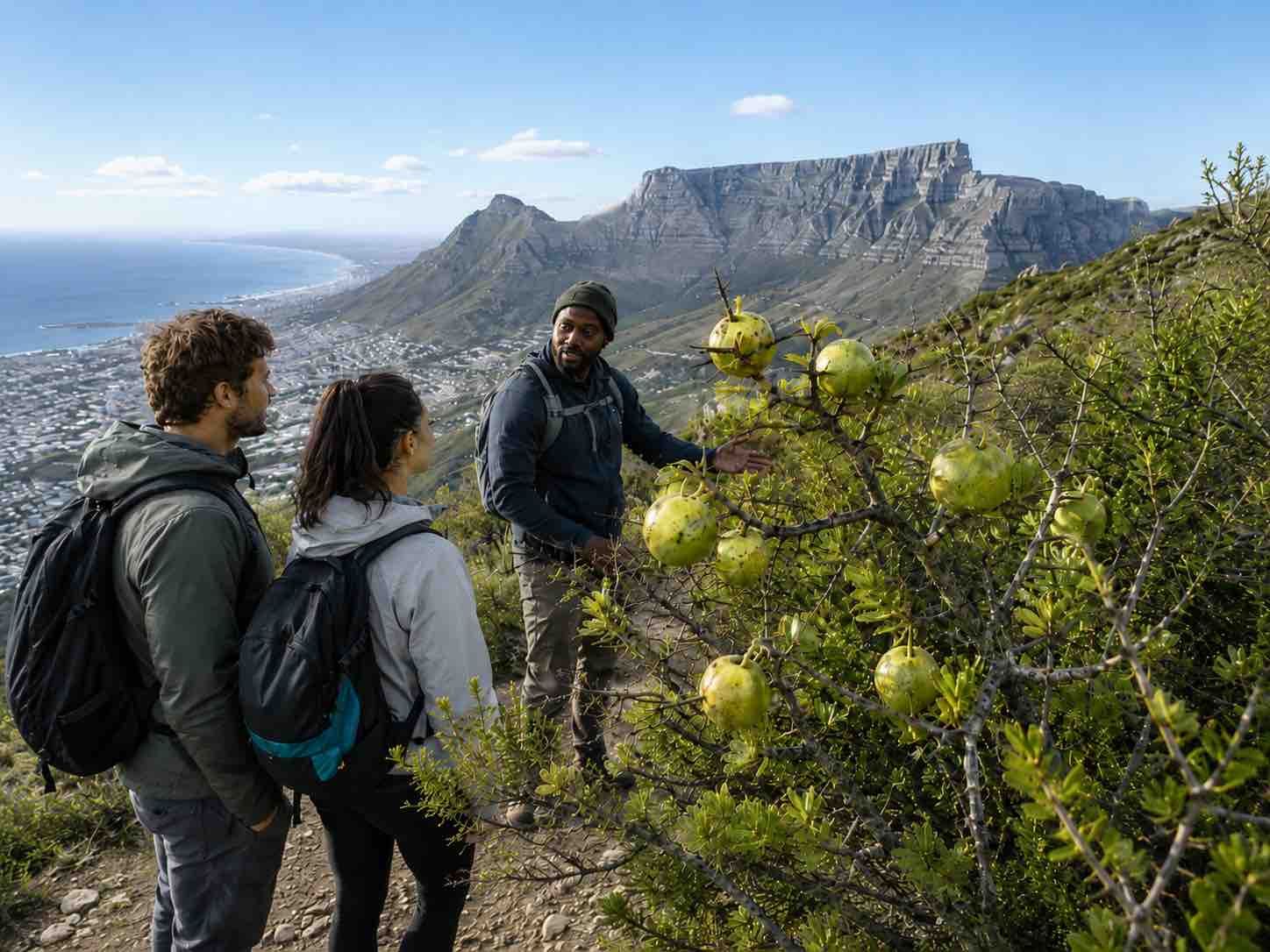
What Is Sodom Apple on Table Mountain? A Local Hiking Guide Answers
If you are searching for Sodom Apple, you may have seen this unusual plant mentioned online, heard about traditional uses, or noticed it while walking near the mountain.
It is a fair question to ask:
What is Sodom Apple, and is it safe?
My honest answer is this:
Sodom Apple is an interesting wild plant, but I do not recommend touching, picking, eating, preparing, or using it as medicine.
As a local hiking guide, I see many visitors become curious about the plants on Table Mountain, Lion’s Head, Pipe Track, and other Cape Town trails. That curiosity is good. But curiosity must also come with respect and caution.
Cape Town’s mountains are beautiful, but they are also living natural environments. Some plants are protected. Some are sensitive. Some have thorns. Some can irritate the skin. Some may be toxic if used incorrectly.
That is why I always tell guests:
Look, learn, photograph, and leave wild plants where they belong.
At Muki Venture, I offer private guided hikes in Cape Town with an accredited local guide with more than 15 years of experience. My goal is not only to guide visitors safely along the trail, but also to help them understand and respect the mountain environment.
This article is written as a practical answer for hikers and tourists, not as medical advice.
What Is Sodom Apple?
Sodom Apple is a tough, thorny shrub known for its round fruit and unusual name.
It is the kind of plant that can easily catch a hiker’s attention. Sometimes visitors ask about it because they have read about traditional plant uses. Others search for it because of online claims linked to natural remedies.
But as a hiking guide, I approach this plant from a safety and nature point of view.
I do not encourage anyone to use Sodom Apple as a home remedy. I also do not recommend picking it, tasting it, or preparing it in any way.
There is a big difference between learning about a plant and using a plant.
On the mountain, I prefer to teach people to observe plants safely, enjoy their role in the landscape, and leave them undisturbed.
Is Sodom Apple Safe to Touch or Use?
No, I would not recommend touching or using Sodom Apple.
Some wild plants can contain toxic compounds or cause irritation. Even if a plant has been used traditionally, that does not mean it is safe for casual use.
Traditional plant knowledge is complex. It can involve the correct plant, the correct part of the plant, the correct preparation, the correct amount, and the knowledge of someone experienced.
That is not something to copy from the internet or try during a hike.
If you are interested in Sodom Apple because of a health concern, please speak to a qualified healthcare professional. I am a hiking guide, not a doctor or herbal medicine practitioner.
If you are interested because you love nature, then the best way to enjoy it is from the trail, with respect.
Why Do People Search for Sodom Apple?
People search for Sodom Apple for different reasons.
Some are curious about the name.
Some want to identify a plant they saw outdoors.
Some have heard about traditional uses.
Some find online claims about natural medicine.
Some are interested in Cape Town’s wild plants and mountain environment.
I understand the curiosity.
When I guide hikes, I often see how one small plant can start a much bigger conversation about the mountain. A guest may stop to look at a shrub, a flower, a seed pod, or a strange-looking fruit, and suddenly the hike becomes more than just exercise.
It becomes a way to understand Cape Town more deeply.
But I always keep the same safety message:
Do not eat, pick, or prepare wild plants from the mountain.
Is Sodom Apple a Natural Medicine?
Sodom Apple has been linked to traditional medicinal use, but I do not recommend it as medicine.
There are many online claims about wild plants, but not all of them are safe, proven, or suitable for self-treatment. A plant can be part of traditional knowledge and still be dangerous if used incorrectly.
This page is not written to promote Sodom Apple as a cure for anything.
It is written to help hikers, tourists, and curious readers understand that wild plants should be treated with respect and caution.
For medical advice, always speak to a qualified healthcare professional.
What Does Sodom Apple Teach Us About Hiking in Cape Town?
For me, Sodom Apple is a reminder that hiking in Cape Town is not only about reaching the top.
Yes, the views are incredible. Lion’s Head at sunrise can be unforgettable. Table Mountain is one of the most famous landmarks in South Africa. Pipe Track gives beautiful views across the Atlantic side. Skeleton Gorge has a completely different forest feeling.
But the small details matter too.
The plants, rocks, insects, birds, tracks, wind, cloud, shade, and changing light all tell part of the mountain’s story.
When I guide visitors, I like to point out what I know, explain what is safe, and also make it clear when something should simply be respected from a distance.
The mountain is not just a photo background.
It is a living environment.
Why Should Hikers Not Pick Wild Plants?
Hikers should not pick wild plants because it can harm the environment and may also be unsafe.
Even if a plant looks common, it may still play an important role. It may help protect the soil, feed insects, provide shelter, or form part of a wider natural cycle.
Some plants are also protected or sensitive. Others may be harmful if touched or eaten.
When we hike, we are visitors in that natural space.
My approach is simple:
Take photos.
Take memories.
Do not take plants.
Cape Town’s mountains are special because they are still alive, wild, and beautifully complex. We need to protect that.
What Should Tourists Know About Wild Plants on Table Mountain?
Tourists should know that Table Mountain is not just a viewpoint. It is part of a unique natural environment with many plant species, seasonal flowers, fynbos, forest pockets, rocky slopes, dry sections, birds, insects, and wildlife.
Some visitors arrive thinking the mountain is like a city park because it is so close to Cape Town. But Table Mountain is a real mountain environment.
The weather can change quickly. Trails can be rocky. Plants can be sensitive. Some areas are exposed. Some routes require proper planning.
That does not mean tourists should avoid hiking.
It means tourists should hike with respect, preparation, and the right local knowledge.
When I guide visitors, I check the weather, choose the right start time, explain the route, guide at a comfortable pace, and help guests understand what they are seeing along the way.
Can You See Interesting Plants on a Guided Hike?
Yes, absolutely.
Many Cape Town hikes offer opportunities to notice fynbos, flowering shrubs, restios, proteas, pelargoniums, forest plants, dry-slope plants, and other hardy species that survive in this mountain environment.
You do not need to be a plant expert to enjoy this.
Many of my guests simply want to hike safely, enjoy the views, take photos, and learn something local along the way.
That is where a private guided hike can make the experience richer.
A hiking app may show you the trail.
A local guide can help you read the mountain.
What Makes Muki Venture Different?
Muki Venture is different because the experience is private, personal, and guided by local knowledge.
I offer private guided hikes in Cape Town with an accredited local guide with more than 15 years of experience.
That matters because guests are not only booking a trail.
They are booking trust.
With Muki Venture, the hike is not treated like a race or a crowded group activity. The experience is built around the guest.
-Your pace.
-Your comfort.
-Your confidence.
-Your fitness level.
-Your travel plans.
Your reason for wanting to hike in Cape Town.
Some guests want sunrise photos. Some want sunset views. Some want a relaxed scenic walk. Some are nervous about heights. Some are travelling alone. Some love plants and nature. Some only have one or two days in Cape Town and want to make the most of their time.
A private guided hike allows me to guide the person in front of me, not just follow a fixed script.
Which Cape Town Hike Is Best for Plant and Nature Lovers?
The best hike depends on your fitness, time, confidence, and what kind of experience you want.
Pipe Track
Pipe Track is a good option for guests who want mountain scenery, ocean views, and a more relaxed pace. It is a lovely route for local stories, plant interest, and scenic walking without climbing all the way to a summit.
Skeleton Gorge
Skeleton Gorge starts from Kirstenbosch and has a greener, more forested feeling. It is a beautiful route for guests who enjoy shade, nature, steps, rocks, and a more adventurous Table Mountain experience.
Table Mountain
Table Mountain has many route options. Some are direct and steep. Some are longer and more scenic. Some are better for confident hikers. The right route depends on the person and the day’s conditions.
Lion’s Head
Lion’s Head is best for iconic Cape Town views, sunrise or sunset photos, and a classic hiking experience. It is not the most plant-focused hike, but it is one of the most memorable routes for visitors.
Signal Hill and Scenic Viewpoint Walks
These are good options for visitors who want something easier, scenic, and less demanding.
With Muki Venture, I can help choose the route that fits your time, fitness, confidence, and travel plans.
Can I Ask for a Slower Nature-Focused Hike?
Yes.Because my hikes are private, the pace can be more personal. If you are interested in plants, fynbos, mountain stories, views, and photography, you can ask for a slower nature-focused experience.
I call this kind of experience a Fynbos & Mountain Stories focus.
It is ideal for:
First-time visitors to Cape Town
Nature lovers
Solo travellers
Couples
Families
Guests who prefer a slower pace
Visitors who want to feel safer
People who enjoy learning while walking
Travellers who want more than just a fitness hike
The goal is not to rush.
The goal is to enjoy the mountain properly.
What Should Hikers Remember About Wild Plants?
My advice is simple:
Do not pick wild plants.
Do not eat wild fruit.
Do not collect seeds or roots.
Do not use mountain plants as medicine.
Do not damage flowers or shrubs.
Do not feed wildlife.
Stay on the path where possible.
Take photos instead of taking plants home.
These small habits protect you and protect the mountain.
Cape Town’s natural environment is one of the reasons people travel from all over the world to visit. We should treat it with care.
Final Advice From a Local Hiking Guide
If you are searching for Sodom Apple because you are curious, that curiosity can become a good thing.
Let it lead you to learn more about Cape Town’s mountains, fynbos, and natural environment.
But do not let it lead you into using wild plants without proper expert advice.
When hiking in Cape Town, the safest approach is:
Look carefully.
Ask questions.
Take photos.
Leave plants where they grow.
Hike with respect.
Cape Town’s mountains are beautiful, but they are even better when you experience them with someone who knows the routes, the weather, the pace, and the local environment.
If you want a private, personal, and safe hiking experience, Muki Venture offers private guided hikes in Cape Town with an accredited local guide with more than 15 years of experience.
Book your private Cape Town hike with Muki Venture and experience the mountain with local knowledge, care, and confidence.
Sodom Apple and Cape Town Hiking FAQ
1. What is Sodom Apple?
Sodom Apple is a thorny shrub with round fruit and an unusual name. People often become curious about it because of traditional plant-use stories and online health claims.
2. Is Sodom Apple safe to use?
I do not recommend using Sodom Apple as a home remedy. Some wild plants can contain toxic compounds or be harmful if used incorrectly.
3. Can Sodom Apple treat erectile dysfunction?
I do not recommend Sodom Apple as a treatment for erectile dysfunction or any other medical condition. I am a hiking guide, not a doctor. Please speak to a qualified healthcare professional for health advice.
4. Can I touch Sodom Apple on a hike?
I recommend not touching it. Some plants can irritate the skin or be unsafe. Take a photo instead and leave the plant where it grows.
5. Can I pick Sodom Apple from Table Mountain?
No. I do not recommend picking any wild plant from Table Mountain or Cape Town’s mountain trails. Picking plants can harm the environment and may also be unsafe.
6. Why do hikers notice Sodom Apple?
Hikers notice it because it looks unusual, has thorns, and has a strong name. Many people also search for it online after hearing about traditional uses.
7. Are wild plants on Table Mountain protected?
Many plants on Table Mountain form part of a sensitive natural environment. Some may be protected, rare, or important to the ecosystem. The safest rule is not to pick or damage any wild plants.
8. What should I do if I see an interesting plant while hiking?
Take a photo, enjoy it, and leave it where it is. If you are with a guide, ask about it. A guided hike can help you understand the mountain without harming it.
9. Which Cape Town hike is best for nature lovers?
Pipe Track, Skeleton Gorge, and some Table Mountain routes are good options for guests who enjoy plants, scenery, and slower observation. Lion’s Head is best for iconic views and a classic Cape Town experience.
10. Do I need a guide to learn about Cape Town’s plants?
You do not legally need a guide, but a local guide can make the experience safer, more personal, and more meaningful. A guide can help with route choice, weather, pacing, safety, and local knowledge.
11. Can I book a private hike focused on fynbos and mountain stories?
Yes. You can ask for a slower private hike with a nature, fynbos, and mountain stories focus. This is ideal if you want to enjoy the mountain without rushing.
12. How do I book a private guided hike?
You can contact Muki Venture directly by WhatsApp, phone, or email. Tell me your preferred date, fitness level, and whether you want an easy walk, sunrise hike, sunset hike, nature-focused hike, or a more adventurous Table Mountain route.
More Cape Town Vlogs & Local Stories
Explore more Cape Town stories from Muki Venture — from hikes and hidden gems to food, events, stays, plant safety, and local experiences.